 International Okinawa Karate-do Muso-kaiOKINAWA CLUBInternational Okinawa Karate-do Muso-kaiOKINAWA CLUB
Learn the body mechanics of traditional Okinawan karate — lost in the age of sport karate — here in Okinawa, where karate was born. Systematic training based on the books of Kiyoshi Arakaki, founder and president of the International Okinawa Karate-do Muso-kai, for beginners and experienced practitioners alike — taught by Kiyoshi Arakaki's direct disciples.
Join a Trial Class (¥1,000) See Training Schedule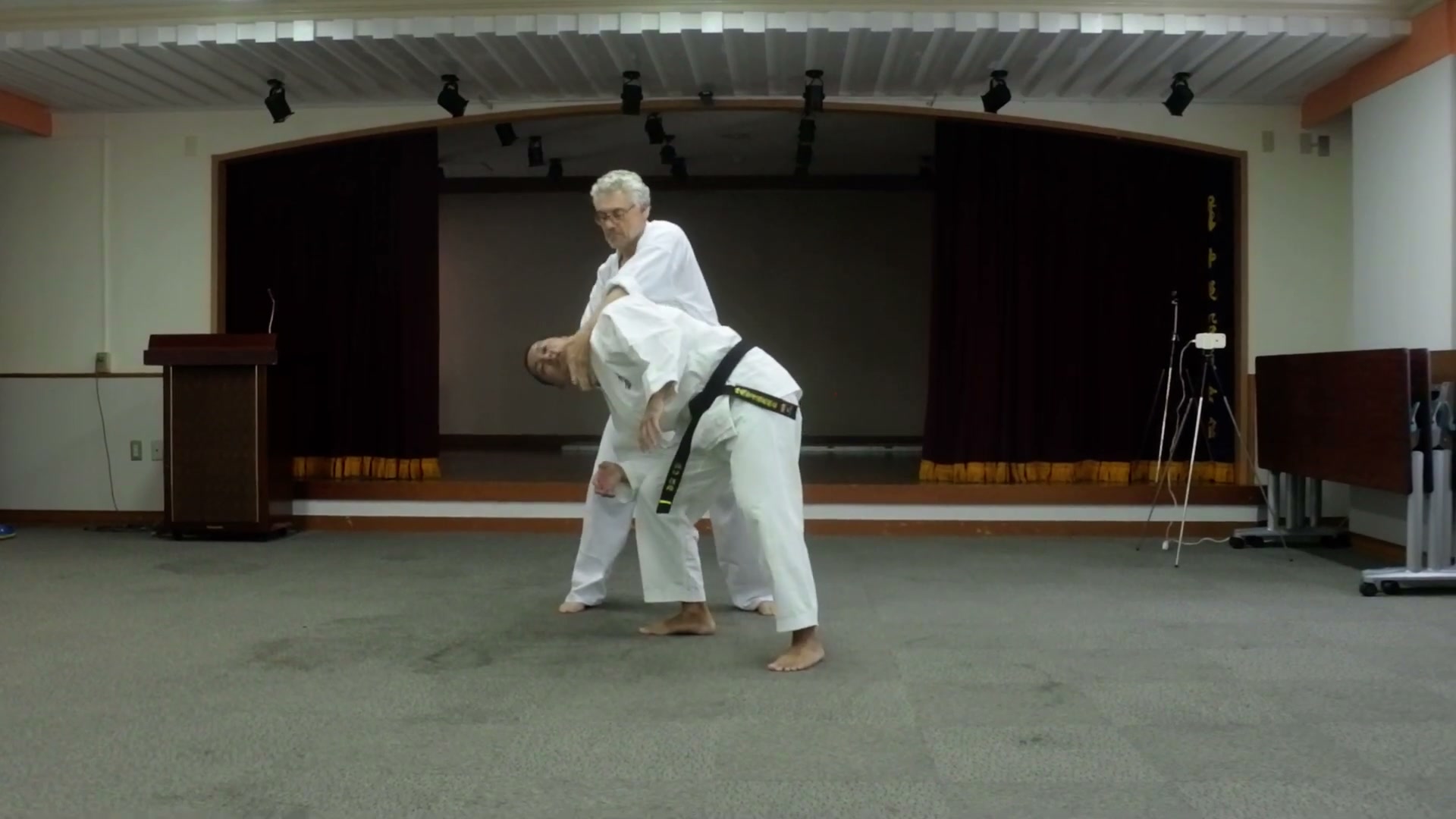
Our training is grounded in founder Kiyoshi Arakaki's book series Okinawa Budō Karate no Gokui (The Essence of Okinawan Budo Karate). Rather than relying on intuition and oral tradition alone, you learn a technical system explained through anatomy and physics — through books and training together.
Traditional Okinawan karate generates energy from the drop of gravity and the use of the hips. Because progress does not depend on age or build, many of our members begin in their 40s and 50s.
There are no competitive matches. Instead of trading points, we work step by step to absorb the original combat principles preserved in kata such as Naifanchi and Pinan.
The name "Muso-kai" comes from munen-musō, a state of mind free of all distracting thoughts. It is also drawn from the words of Master Arakaki — "Those who contemplate Nothingness bring forth Something for the world."
Our symbol places the seiken — the fore-fist of karate — inside the mitsudomoe, the crest of the Shō royal family of the Ryukyu Kingdom and the emblem of the kingdom's flag. The royal crest, called the Hidari Gomon, swirls to the left; Muso-kai's symbol turns to the right out of respect for the Shō family and the Ryukyu Kingdom. It carries a wish: that karate, born in Okinawa and now spread across the world, will contribute to the peace and prosperity of the world — and that this role will, in time, return as a contribution to Okinawa itself.
Not karate as a sport,
but karate as a martial art.
No matches, no point-scoring. We unlock, one by one, the body mechanics our predecessors preserved within the kata, and practice karate as a budo you can continue for life.
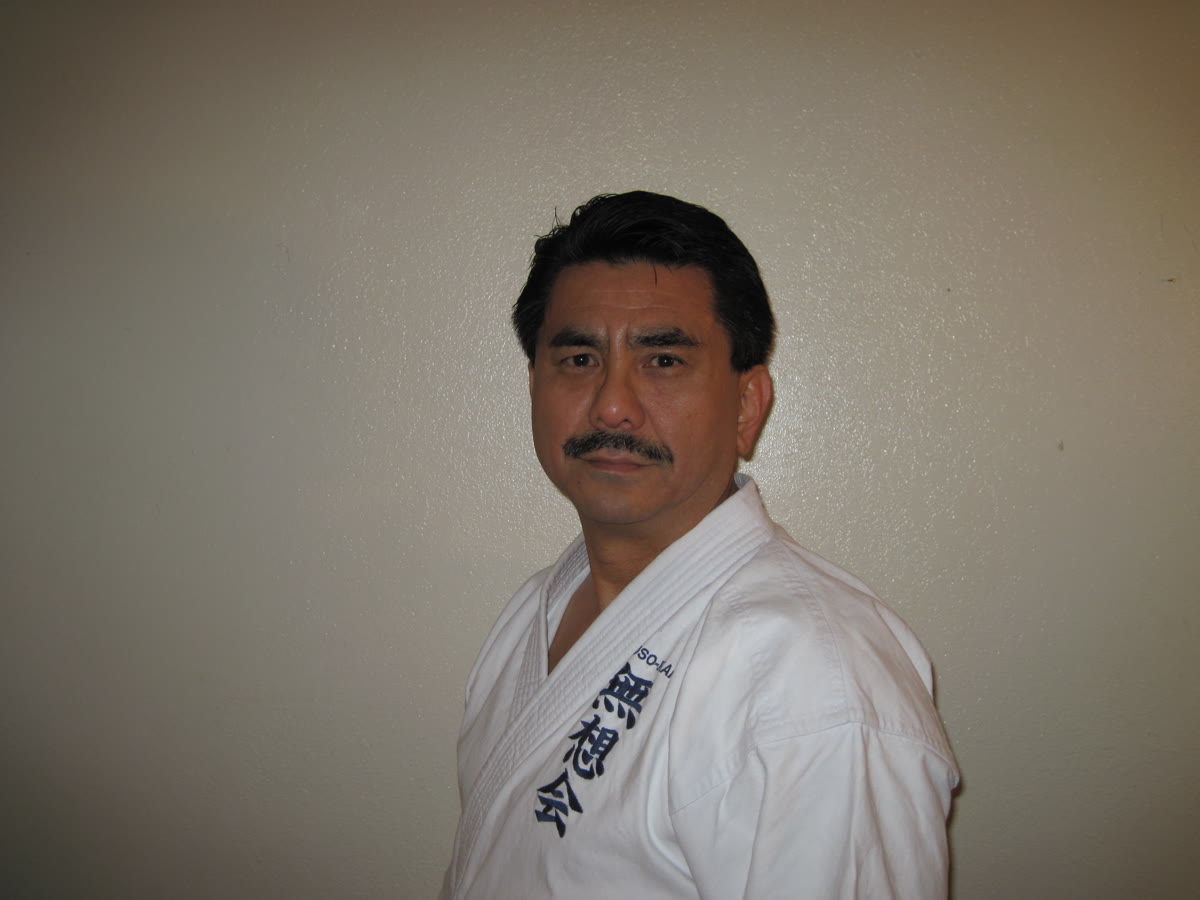
Born in 1954 in Naha, Okinawa — the birthplace of karate — as the eldest son of a medical family that ran a surgical hospital. With Shinei Kyan, a 9th-dan master of Matsubayashi-ryu, among his mother's relatives, he grew up close to karate from early childhood. He went on to research and systematize the body mechanics of traditional Okinawan karate — lost as sport karate spread around the world — from the standpoint of anatomy and physics, and founded the International Okinawa Karate-do Muso-kai.
His books, the Okinawa Budō Karate no Gokui series, made a major impact on the karate world, and he holds seminars in Japan and overseas. Today, his direct disciples across Japan, including Okinawa, run study groups and dedicate themselves to passing on his techniques, while Kiyoshi Arakaki himself continues a seminar tour spanning Japan twice a year to further develop his direct disciples' skills.
His work has been published in English as The Secrets of Okinawan Karate: Essence and Techniques (Kodansha International, 2002) — read by karate practitioners worldwide.
How one karateka arrived at the lost principles of the old art — the journey of founder Kiyoshi Arakaki.
Born in Naha, the eldest son of a doctor of medicine who ran a surgical hospital. Among his mother's relatives was Shinei Kyan, a 9th-dan master of Matsubayashi-ryu who also served in Japan's House of Councillors, and he grew up with a longing for karate from an early age.
In junior high school he helped found a karate club — still a rarity at the time — and received thorough instruction in the kata of Shuri-te, built on Naifanchi, from Tenei Taba, an early student of Master Shoshin Nagamine. During his years at Naha High School, he entered Master Nagamine's dojo. In an era when "one person, one art" traditions still survived across Okinawa, he sought out many of the so-called hidden bushi.
After moving to the United States and coaching a university karate club, he opened the Muso-kai dojo in Utah in 1980.
He and his students placed highly in international full-contact and kōshiki (protective-gear) karate tournaments, and he came to host Utah's largest national tournament twice a year. In 1987 he was appointed president of the U.S. Koshiki Karate Federation and awarded 6th dan (he now holds 7th dan). The influence of Joko Ninomiya, founder of Enshin Kaikan, also dates from this period.
As a volunteer at Mother Teresa's Home for the Dying in Calcutta, he cared for many people in their final hours. Born into a family devoted to saving lives, yet devoted himself to an art whose ultimate end is to defeat another — facing that contradiction, he arrived at the principle: "Those who contemplate Nothingness bring forth Something for the world."
"I could perform the kata, but I had not understood the ti — the art itself as a martial art." Confronting this fact, he halted all of his flourishing tournament and teaching activities and retrained from scratch in the old kata, beginning with Naifanchi. It was a genuinely difficult period, marked by financial hardship.
Okinawan karate had been handed down one-to-one, from master to student. He spent roughly five more years establishing a way to teach it to many students at once. The result is Muso-kai's present system, in which everything from basics to kumite is unified by the principles of Naifanchi.
The body mechanics he regained through retraining were published as the Okinawa Budō Karate no Gokui series, which came to be known as the "Arakaki Theory" and has been translated into English, Spanish, and Italian. In Okinawa Karate-dō no Rekishi (The History of Okinawan Karate-do, 2011, Hara Shobo) and "Heian no Kata" no Kenshō (A Study of the Pinan Kata, 2013, Hara Shobo), he shed light on the karate of the Ryukyu Kingdom era and on the Pinan kata. Today he holds seminars around the world, and study groups have been founded across Japan.
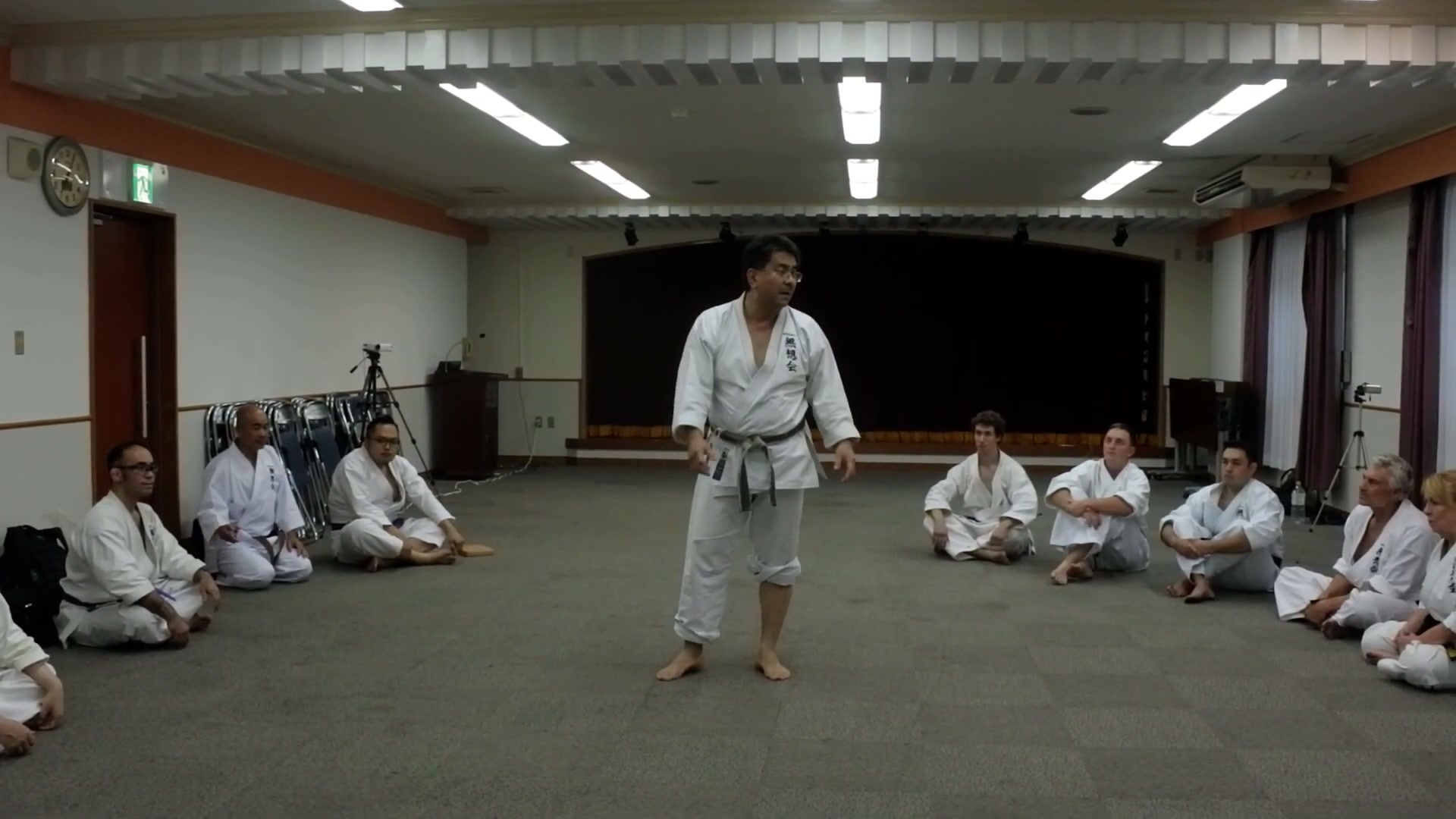
We train at three locations in Okinawa Prefecture — join the one nearest you. The leader teaching at every study group is a direct student who has trained under Grandmaster Kiyoshi Arakaki in person for more than ten years.
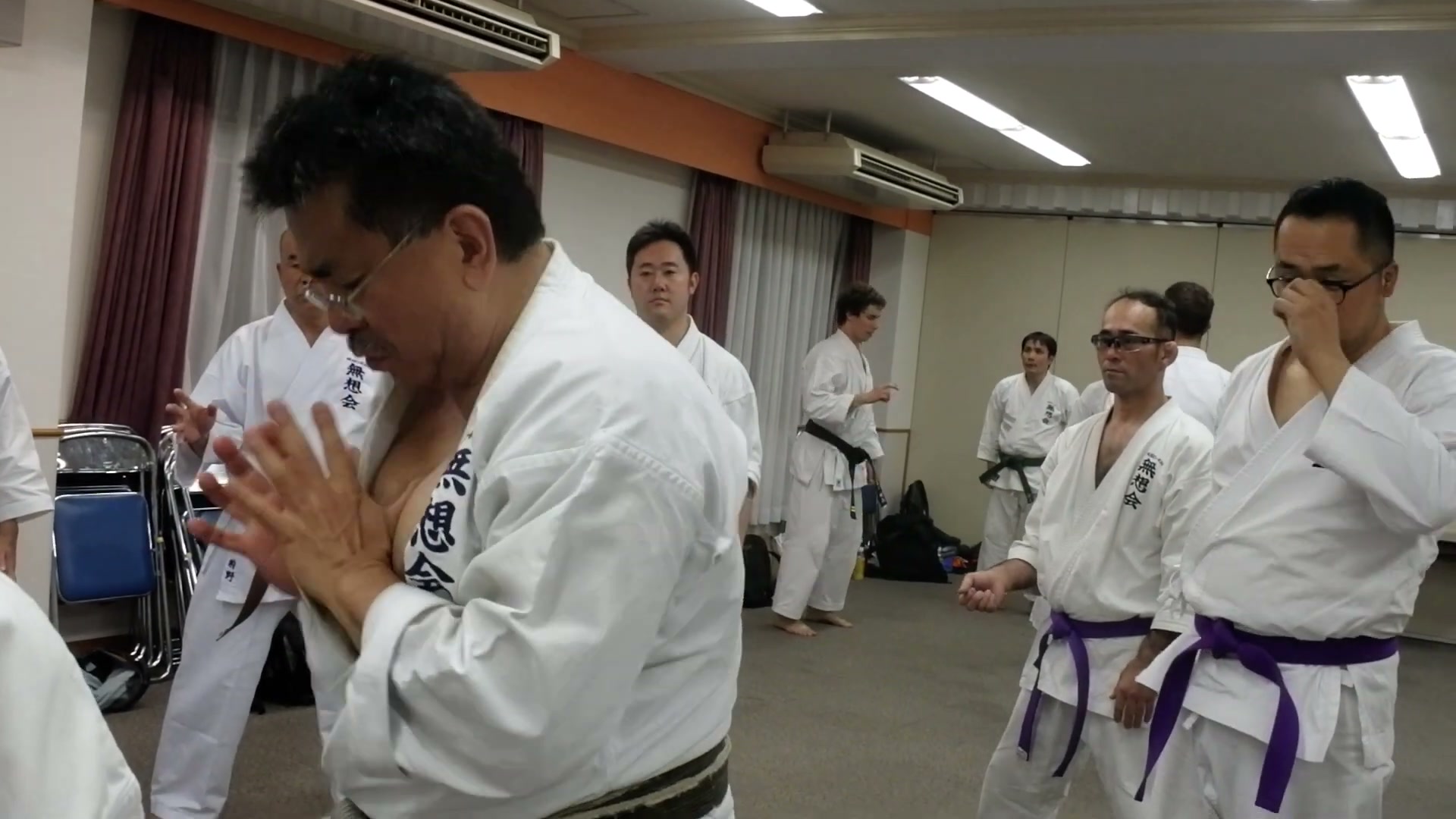
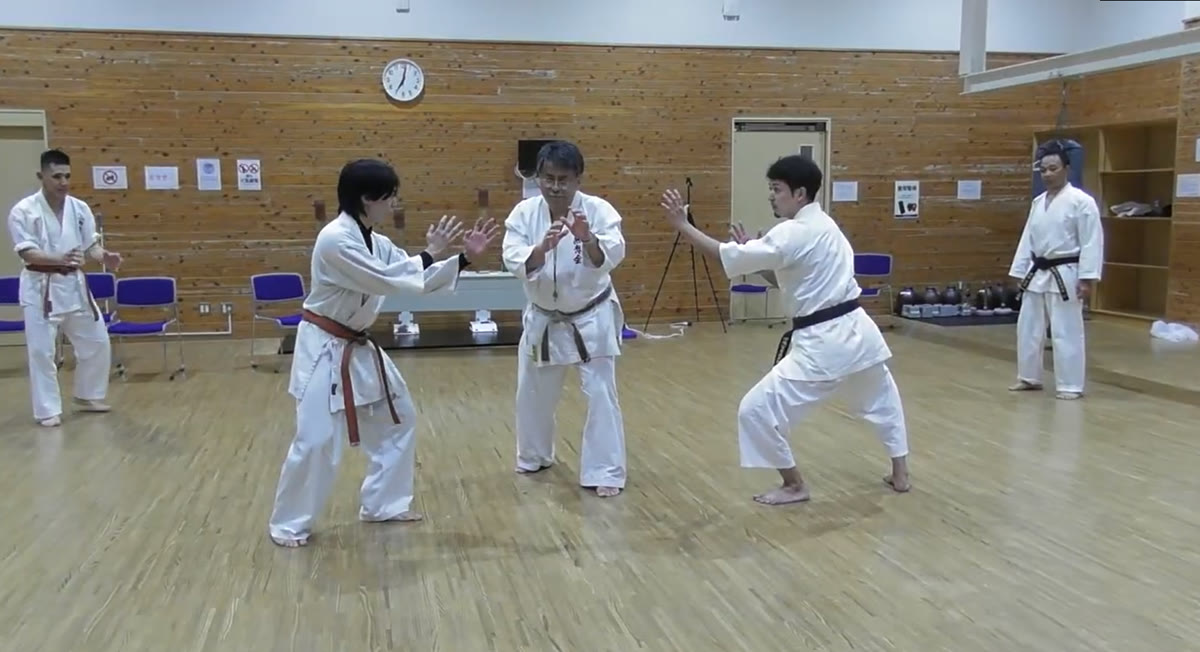
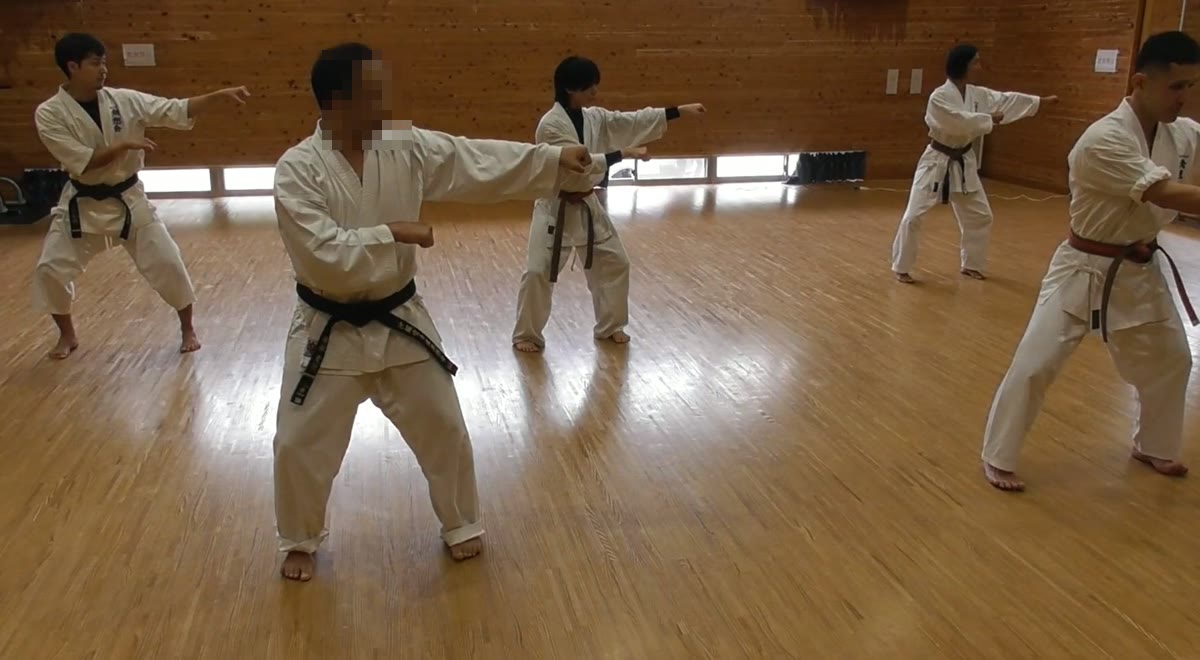
| Trial class (first visit only, observation included) | ¥1,000 |
|---|---|
| Drop-in training (from your 2nd visit, without joining) | ¥3,000 / session |
| Enrollment fee | ¥10,000 |
| Monthly fee (Naha) | ¥5,000 (students: ¥3,000) |
| Monthly fee (Okinawa City) | ¥5,000 (students: ¥3,000) |
| Monthly fee (Iriomote) | Please contact us |
| Annual fee | ¥10,000 (paid every April, at the start of the fiscal year) |
All prices include tax.
Send us your preferred training group and date using the application form below.
Our staff will e-mail you your visit date and what to bring.
Comfortable clothes and a drink are all you need. Bring your gi if you have one.
No pressure to join after the trial — take your time to decide.
Muso-kai's techniques are introduced one episode a week in our Instagram manga series based on Okinawa Budō Karate no Gokui (in Japanese). Get a feel for our training and way of thinking on social media first.
Muso-kai's techniques are explained by Kiyoshi Arakaki himself on YouTube — the Muso-kai Karate Channel. See the theory behind Muso-kai on social media first.
Official sites, blogs, and social media of the headquarters and of study groups across Japan and overseas.
First visit (observation included): ¥1,000. Feel free to get in touch.
Go to the Application Form The application form is in Japanese. If you'd prefer, you may write to us in English by e-mail instead of using the form. Contact us by e-mail: musokai.okinawa.branch@gmail.com